Interested in a career working with kids? Early Childhood Educators play an important role in fostering children’s development, while serving as both caregivers and educators.
Taking the leap into a new career can feel intimidating when the future is uncertain, but it doesn’t have to feel that way! This blog post covers the many facets of a career in Early Childhood Education, so you can feel informed and take the next step with confidence. Keep reading to get a closer look at a day in the life of an Early Childhood Educator.
Still have questions? Our admission advisors are here to help. Fill out the contact form below, and an advisor will get back to you soon!
Promote Children’s Development Through Activities
Early Childhood Educators are more than just caregivers; they’re responsible for creating, implementing, and leading activities that promote children’s social, emotional, physical, and cognitive development, as well as early literacy and numeracy skills. From science experiments and sensory play to math games, teamwork activities, circle discussions, and more, there are countless activities that can take place in early learning environments!
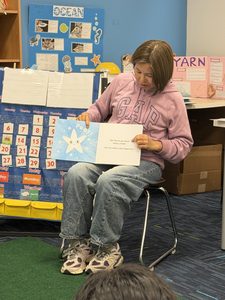
One of the best and most common ways to engage young children is through story time! By reading books aloud, ECEs introduce children to new words and proper sentence structure, helping them take important steps in their early literacy development. Story time can also expand children’s worldview, teach them problem-solving skills, and spark their curiosity. Many stories also provide an opportunity for children to recognize and understand characters’ emotions, which in turn helps them identify and express their own feelings.
A student from Sprott Shaw’s Richmond campus reads a story aloud, showing her audience the words and pictures on the pages so they can follow along.
ECEs also lead activities that encourage physical development, including games, outdoor play, and playground time, where children can release some energy while developing their balance and coordination. Activities like dancing, sports, obstacle courses, and climbing on playground equipment are not only fun, but they also help build children’s gross motor skills and instill confidence and independence. Along with developing gross motor skills, ECEs help children strengthen their fine motor skills through activities like drawing, colouring, cutting shapes, and doing puzzles.
Many activities in early childhood centres may seem like just fun and games, but ECEs take great care to find or create activities that have a positive impact on children’s development while still being enjoyable and engaging. For these reasons, Early Childhood Educators should be creative, hands-on, and observant. ECEs are responsible for designing and implementing activities, observing whether children enjoy and learn from them, and determining if those activities are successful or require improvements.
Support Children with Day-to-Day Needs
Early Childhood Educators are responsible for establishing a routine and supporting young children with everyday tasks they may need help with, such as eating, dressing, and toileting. As an ECE, there will always be a child who needs your help, whether they need assistance putting on a jacket, opening their lunch, washing their hands, or simply navigating a new routine. Although they may seem like small responsibilities, these little tasks add up! Helping each child in a classroom during meals, with handwashing, or with taking their shoes and jackets on and off can end up being quite time-consuming.
Early Childhood Educators must also maintain open communication with parents and caregivers. It’s vital that educators and parents are on the same page, so everyone has a better understanding of each child’s needs and behaviours. Parents entrust ECEs with the care of their children, so maintaining open communication can provide reassurance that their children are safe, well cared for, and learning from positive role models.
Observe and Guide Behaviour
As trusted educators and caregivers, ECEs are responsible for observing children’s behaviour and guiding them towards healthy habits while discouraging inappropriate or harmful behaviour. In an Early Childhood Education setting, children learn important social skills, such as how to share, use their manners, and express their emotions and needs, through their interactions with ECEs and other children. Early Childhood Educators can support children’s positive social development by modelling good communication, guiding them through conflict resolution, and maintaining a calm and approachable demeanour.
Launch Your Career with Sprott Shaw College
Ready to take the next step towards a rewarding career as an Early Childhood Educator? Sprott Shaw College is the place to be! With 15 campuses across the province, online learning options, and monthly start dates, we offer flexible learning that works for you.
Our Early Childhood Education programs teach students the theory and skills needed to thrive in Early Childhood Education settings. This includes developing engaging, age-appropriate activities, implementing program plans, learning methods of observational recording, and much more. Additionally, students in our ECE programs take part in practicums, allowing them to gain hands-on experience in real ECE settings before they graduate and enter the field.
Future ECEs interested in working within a broader scope can take our Early Childhood Education Diploma program, which qualifies them to work with children ages zero to three and children with exceptionalities through additional training built into the program.
Whether you’re ready to launch your career or you have further questions, our admission advisors are here to help. They can provide you with more information on admission requirements, the enrollment process, funding options, upcoming program start dates, and more! Click the button below to complete the contact form and an advisor will reach out to you soon.
Disclaimer: Information contained in blog posts (including program offerings, program details,
career information, and more) is subject to change. For the latest up-to-date information, contact an admissions advisor or visit our program
pages.