


Program Overview
Hands-on Learning with Practicums and Preceptorships: Our paramedic students will have placements with BC Emergency Health Services and local Health Authoritites. Unique to Sprott Shaw, preceptorships and practicums are woven throughout the curriculum so that students gain their practical experience during the program.
EMR Certification Included: Sprott Shaw College’s Primary Care Paramedic program is unique in that our program is designed for those who are brand-new to paramedicine to start their career. As such, there is no EMR certification requirement to start our program—instead, students learn EMR skills throughout their training. If you already have earned your EMR certification, you can receive $1000 off your tuition!
Primary Care Paramedic was reviewed and approved by the registrar of the Private Training Institutions Regulatory Unit (PTIRU) of the Ministry of Post-Secondary Education and Future Skills.
Sprott Shaw College is an approved EMALB Educational Program.
Licensed to administer patient care, most BC paramedics are PCPs, and they handle the majority of 9-1-1 calls.
The role of a paramedic varies widely across the world, as emergency medical services (EMS) providers operate with many different models of care. In the Anglo-American model, paramedics are autonomous decision-makers. However, in some countries, such as the United Kingdom and Australia, the paramedic role has developed into an autonomous health profession, which is Canada’s direction.
Paramedics mainly work as part of the EMS, most often in ambulances and due to the nature of their job, paramedics work in diverse and dynamic environments. Paramedics also work in non-emergency situations, such as transporting chronically ill patients to and from treatment centres and, in some areas, address social determinants of health and provide in-home care to sick patients at risk of hospitalisation, a practice known as community paramedicine.
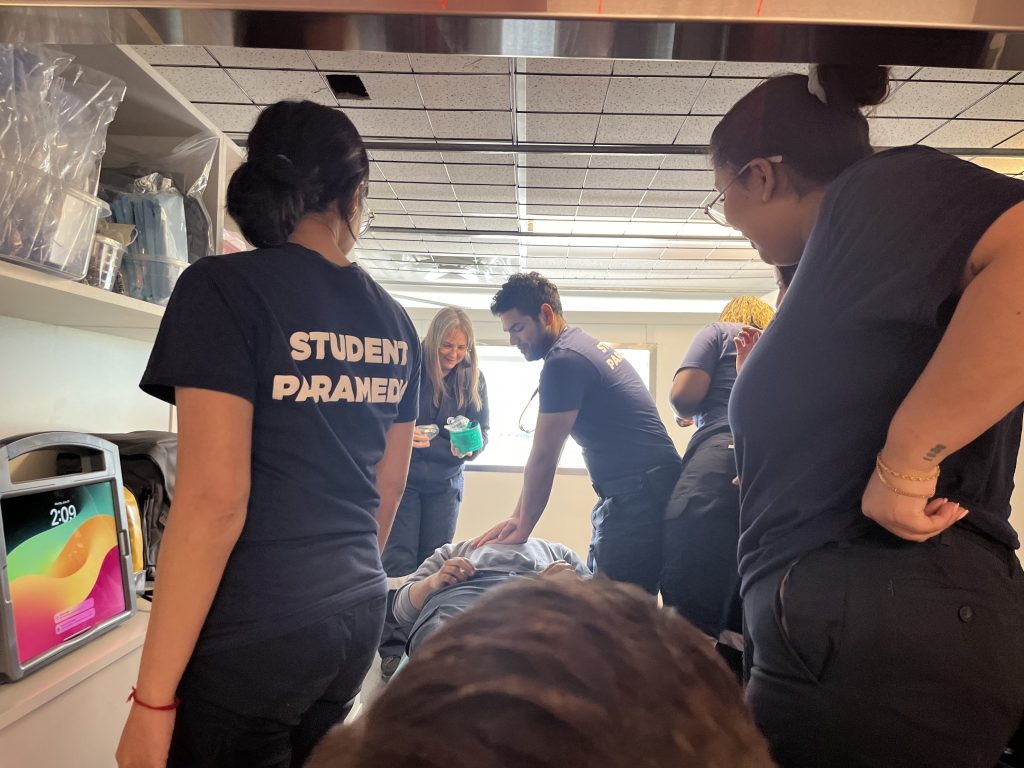
Students will learn all aspects of paramedicine to a national standard. They can expect to participate in discussions and reflective exercises in a safe and supportive environment facilitated by their instructors. They will also engage in hands-on and practical training in clinical skills through various formats such as role plays, skill labs, scenarios, simulations, recorded or live demonstrations, and practicums.
Graduates qualify for licensure with the Emergency Medical Assistants Licensing Board (EMALB) and once licensed, for membership of the Paramedic Association of Canada (PAC).
In British Columbia (as of 2023), there is no regulatory college; licensure is provided by the Emergency Medical Assistants Licensing Board (EMALB) The Board is responsible for examining, registering, and licensing all emergency medical assistants (EMAs) in B.C., including first responders. Under the authority of the Emergency Health Services Act, the Board sets licence terms and conditions. In addition, the board investigates complaints and conducts hearings where necessary.
The board recognises a competency profile that has been developed and updated since 2006. The National Occupational Competency Profile is in place and last updated and endorsed by the Paramedic Association of Canada in 2011, which includes relativity to counselling of indigenous clients.
Students of the Primary Care Paramedic program will initially be issued with a student license to practice under supervision and, once complete, eligible for a full license for independent practice.
https://www2.gov.bc.ca/assets/gov/health/about-bc-s-health-care-system/heath-care-partners/colleges-board-and-commissions/emergency-medical-assistants-licensing-board/emalbrecognizedtrainingprograms.pdf
Sprott Shaw’s PCP program has built in the 2023 new scope of practice that includes the ‘FR TO ACP Gap’ and Endorsement Training Modules.
The core competencies required by the Paramedic Association of Canada (PAC) are tested under the following categories:
- Professional responsibilities
- Communications
- Health and safety
- Assessment and diagnostics
- Therapeutics
- Integration
- Transportation
- Health promotion and public safety
The vision of the Paramedic Association of Canada (PAC) is to have paramedicine recognised in primary health care. The mission of the Paramedic Association of Canada is to provide quality care for the public through leadership in advancing the profession of paramedicine: https://paramedic.ca/
PAC is comprised of nearly 40,000 paramedics from coast to coast to coast. The Association is a national organisation of pre-hospital practitioners that promotes quality and professional patient care through working relationships among organisations with similar interests. Protection of the public and development of the profession in the public interest is the foundation.
Paramedics are in demand across Canada, and licensed paramedics can move between provinces relatively easily. Each province is a little different, but in general, paramedics work in both public and private practice; roles can include the public sector, private sector, and internationally. Career opportunities are listed in the below.
Career Opportunities
- Primary Care Paramedic
- Paramedic
- Industrial Medical Response
- Remote Camp Medicine
- 9-1-1 Response
- Event Medicine
- Community Paramedicine
- Cruise Ships, Repatriations
Learning Objectives
Upon successful completion of the Primary Care Paramedic Diploma program, graduates will be able to:
- Provide safe, ethical, and sociocultural-sensitive care according to the guidelines as set by schedule III of the Emergency Medical Assistants regulations.
- Practice in a reflective, responsive, accountable, and professional manner as required by legislation, the defined scope and standards of practice, and the code of ethics as described in the Health Professions Act.
- Demonstrate comprehensive and competent knowledge of paramedical theories and practices.
- Assist in and apply practices that promote the physical, psychological, social, cognitive, and spiritual well-being of clients
- Work collaboratively as part of an integrated health care team to provide high quality care for clients.
- Engage in evidence-based practice.
- Recognize the benefits, limitations, and contradictions of differing theoretical frameworks.
- Display knowledge of physiology and pathophysiology relevant to practice.
- Recognize and respond to one’s self-assessment, self-development, learning, and health enhancement needs.
- Apply self-reflective and self-appraisal processes to improve your effectiveness in your paramedical practice, including, readings, and peer feedback.
- Prepare client records and reports accurately.
- Utilise various diagnostic and assessment tools.
Methods of Evaluation
Methods of evaluation vary amongst the courses in the program. Please see the individual course outlines on how students are evaluated for each course.
Why Study At Sprott Shaw?
- Monthly start dates: Start your education when you want to without the wait for many of our programs
- Practicum opportunities: Build your skills with included practicums at recognized organizations across BC.
- Access to dedicated Employment Services Specialists (ESS): Our Employment Services Specialists are here to help you with resume and cover letter writing, interview skills, and the overall job search after graduation
- All-inclusive program costs: What you see is what you pay. Our costs include registration fees, assessment fees, tuition, textbooks, supplies, course materials, uniforms, certificates, graduation fees, clinical and practicum fees, and much more
- Grant and scholarship opportunities are available to help you save on tuition. Up to $4000 in scholarships and grants are open to recent high school graduates, Sprott Shaw alumni, military veterans, and more! Click here to browse our full list of grants and scholarships.
Paramedic Videos
Paramedic Simulators 360 Tour
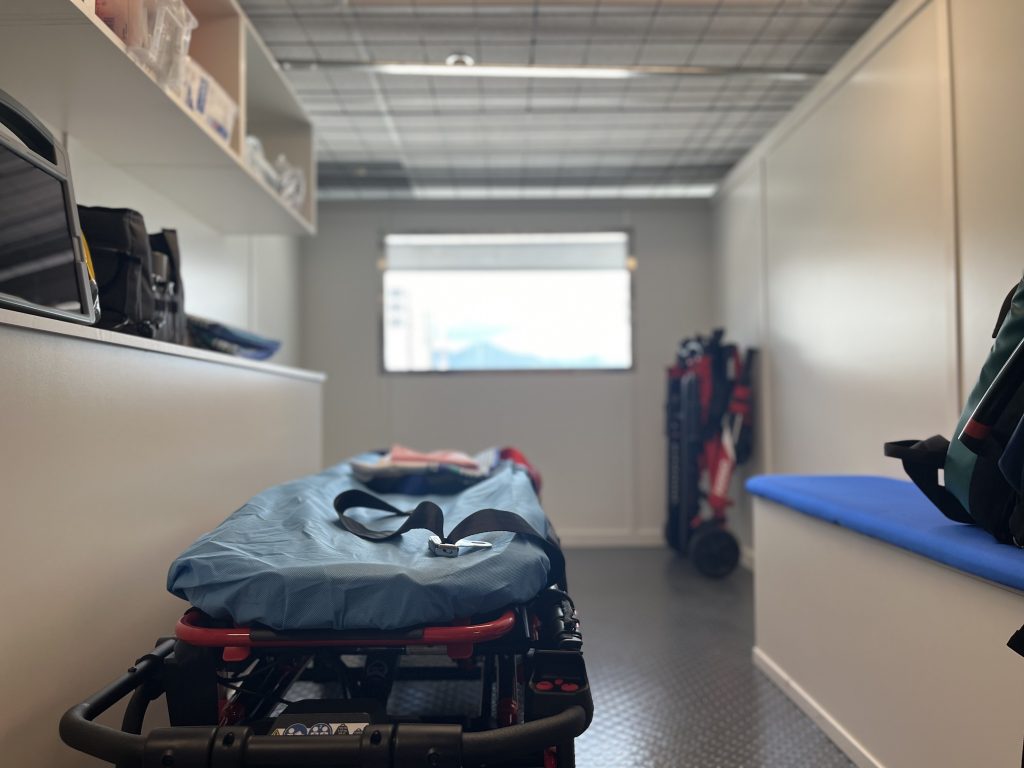
Paramedic Program Photo Gallery



Program Details
Admission Requirements
Applicants must meet all the pre-requisites listed below, meet their financial obligations to the college at registration, and acknowledge their understanding of SSC’s policies and procedures provided in the Student Handbook, prior to starting classes.
Note: Students are provided with a detailed list of books, e-resources, workshop/lab supplies, and lab/tool kits that are included in the program’s fees and will have the opportunity to opt in or out of purchasing from Sprott Shaw College or any other specific source any of these items at the time of registration.
Education Level (one of the following)
- Grade 12 or equivalent (GED, Adult Basic Education) with evidence of a ‘true certified copy’ or original transcript
- Mature student status (age 19 and one year out of high school)
Language Proficiency Policy
All programs at Sprott Shaw College (SSC) are conducted in English. Therefore, proficiency in the English language is a requirement for enrollment. This can be demonstrated by evidence of:
A). Completion of 3 years of full-time secondary (Grades 8-12) or post-secondary education in English in a country where English is the language of instruction, or validation of both language of instruction and credential level is provided by WES, ICES or IQAS.
Countries where English is the Language of Instruction
American Samoa, Anguilla, Antigua and Barbuda, Australia, Bahamas, Barbados, Belize, Bermuda, Botswana, British Virgin Islands, Canada, Cayman Islands, Dominica, Falkland Islands, Fiji, Gambia, Ghana, Gibraltar, Grenada, Guam, Guyana, Ireland, Jamaica, Kenya, Lesotho, Liberia, Malta, Mauritius, Montserrat, New Zealand, Nigeria, Saint Helena, Saint Lucia, Saint Kitts and Nevis, Saint Vincent and the Grenadines, Seychelles, Sierra Leone, Singapore, South Africa, Tanzania, Trinidad & Tobago, Turks and Caicos Islands, Uganda, United Kingdom, United States, United States Virgin Islands, Zambia, & Zimbabwe.
or
B). By achieving a recognized standardized language test/assessment at an overall level equivalent.
IELTS Academic (minimum scores)
- Speaking: 7.0
- Listening: 7.0
- Reading: 7.0
- Writing: 7.0
- Overall Band Score: 7.0 (scores valid for two years)
TOEFL iBT (minimum scores)
- Listening: 24
- Speaking: 24
- Reading: 22
- Writing: 20
- Overall score of 90
CAEL (Canadian Academic English Language Assessment)
- Listening: 80
- Speaking: 70
- Reading: 70
- Writing: 70
- Overall score of 70
CLB (Canadian Language Benchmark Placement Test)
- Listening: 9
- Speaking: 8
- Reading: 8
- Writing: 8
- Overall score of 8
English Requirement (one of the following)
- English 12 (minimum grade 65%)
- English 12 First Peoples (minimum grade 65%)
- SSC English for Healthcare (minimum grade 76%)
Math Requirement (one of the following)
- Math 11 Foundations (minimum grade 60%)
- SSC Math for Healthcare (minimum grade 64%)
Biology Requirement (one of the following)
- BC Curriculum Anatomy and Physiology 12 (formerly known as Biology 12) (minimum grade 60%)
- BC Curriculum Biology 12 (minimum grade 60%)
- SSC Biology Basics (minimum grade 60%)
Health Requirement (one of the following)
- Completed SSC Health Declaration form
- Physician’s waiver
Other Requirements
- Applicants must successfully complete the admissions interview
- Students must provide evidence of a negative TB result OR proof of a scheduled TB appointment within 4 weeks of their program start date
- The Criminal Records Review Program (CRRP) screens people who work with children or vulnerable adults (proof of application for a CRC)
Practice Education Requirements
- The Criminal Records Review Program (CRRP) screens people who work with children or vulnerable adults. Students must provide the college with a cleared CRC prior to the Practice Education start date.
- Provide proof of negative TB results
- Provide evidence of up-to-date Immunizations: Measles, Mumps, Rubella, Polio, Chicken Pox, Tetanus, Diphtheria, Hepatitis B, Pertussis OR a signed vaccination waiver on file
- Provide evidence of full COVID-19 vaccination OR a signed vaccination waiver on file
- Influenza vaccinations (and others), as required by clinical sites OR a signed vaccination waiver on file
- Adhere to the requirements of the BC Practice Education Guidelines
Diploma Requirements
- Successful completion of all on-campus courses with a minimum of a 70% overall average.
- Successful completion of all courses that are graded with a “pass/fail.”
- Successful completion of all industry-certified courses and third-party training provided during the program.
- Successful completion of any required capstone projects, portfolios, or term papers assigned at the beginning of the program.
Post-Program Licensing Requirements
As a Primary Care Paramedic, you are required to be licensed in the province where you wish to practise. In British Columbia, through EMALB, you must pass the following in order:
- Canadian Organisation of Paramedic Regulators (COPR) written exam
- EMALB Jurisprudence written exam
- EMALB Practical exam
Additional Program Information
- Sprott Shaw College determines the start dates for this program, and the frequency of delivery (number of cohorts) depends on enrolment.
- Courses are scheduled Monday to Friday, with students expected to attend all sessions, which are typically six hours in length (unless otherwise noted in the course descriptions).
- Specific class hours and schedules will be provided by the college at the time of enrolment.
- Work experience (practicum) components are generally full-time hours (a minimum of six clock hours); however, scheduling may vary depending on host placement requirements.
- Any missed practicum hours must be made up in order to meet minimum attendance requirements
Contact Us Today!
Our advisors are happy to answer any questions.
Courses List
This 52 week Diploma program requires the student to complete the following courses.- This course gives an overview of the structure and function of 10 body systems. Various health promotion strategies will be discussed to help work towards the optimal functioning of the body systems.
- Course outcomes will be met through the examination and exploration of the following concepts: 10 Body Systems, Medical Terminology, Chemistry and cellular activity, Special senses, Fluid and electrolyte balance, Acid-base balance.
- This course provides instruction in the technical skill associated with Primary Care Paramedicine.
- Course outcomes will be met through the exploration, demonstration, and examination of the following concepts: Equipment Orientation, Patient Movement, Patient Assessment Model, Systems-based approach to physical examination, Intervention Skills.
- This course provides students with the knowledge and skills regarding pharmacological terminology, drug reference book usage, drug classifications, drug selection, selected disease states, dosage forms, packaging, and pharmaceutical calculations.
- Pre-requisite: PARA102
- This course provides the foundations in the necessary non-technical skills to operate as a Primary Care Paramedic.
- Including: Verbal & Written Communication, Cultural Awareness, Legal & Ethical awareness, Crew Resource Management, Community Health Promotion, Personal Safety.
- Students further their practical knowledge of the paramedicine profession/industry
- Conduct effective job searches and use strong interview techniques
- Create a career development marketing plan
- Present oneself professionally through both traditional and digital media methods and platforms
- This two-week practical course includes a minimum of four shifts totaling 48 hours.
- It also includes individual ‘post-conference’ sessions between instructors and students and/or group ‘touch-back’ sessions relevant to the learning experiences acquired during the preceptorship.
- Pre-requisites: PARA101, PARA102, PARA103 & PARA104
- This course introduces the pathophysiology of common complaints in a systems-based approach while simultaneously integrating the assessments, treatment and skills covered in previous courses.
- The focus is on the following body systems: Cardiovascular, Neurological, Respiratory, Genitourinary & Reproductive, Gastrointestinal, Integumentary, Musculoskeletal.
- Pre-requisite: PARA203
- This course capstones the primary care paramedic programme.
- Taking the learning out of the lab setting, the learners integrate real-world environments into their existing practice in preparation for their final practicum, where they will work (supervised) with genuine patients.
- Pre-requisite: All theory/practical courses in PCP program.
- This course is designed to prepare students for the licensing exam.
- Pre-requisite: PARA201
- This two-week practical course includes a minimum of four shifts totalling 48 hours.
- It also includes individual ‘post-conference’ sessions between instructors and students and/or group ‘touch-back’ sessions relevant to the learning experiences acquired during the preceptorship.
- Pre-requisite: PARA202
- This two-week practical course includes a minimum of four shifts totalling 48 hours.
- It also includes individual ‘post-conference’ sessions between instructors and students and/or group ‘touch-back’ sessions relevant to the learning experiences acquired during the preceptorship.
- Pre-requisite: PARA203
- This two-week practical course includes a minimum of four shifts totalling 48 hours.
- It also includes individual ‘post-conference’ sessions between instructors and students and/or group ‘touch-back’ sessions relevant to the learning experiences acquired during the preceptorship.
- Pre-requisite: PARA204
- This three-week practical course includes a minimum of eight shifts totaling 96 hours.
- It also includes individual ‘post-conference’ sessions between instructors and students and/or group ‘touch-back’ sessions relevant to the learning experiences acquired during the preceptorship.
- Computer basics/file management
- Goal setting, note taking, problem solving, team work
- Overview of policies & procedures
- Demonstrate ability to use MS Word and MS PowerPoint
- Pre-requisite: PARA201
- This course introduces the pathophysiology of common complaints in a systems-based approach while simultaneously integrating the assessments, treatment and skills covered in previous courses.
- The focus is on the following body systems: Immune, Endocrine, Head, Ears, Eyes, Nose & Throat (HEENT) • As well as the following complex pathological presentations: Toxicology, Alternate care pathways, Multisystem/Palliative, Environmental.
- Pre-requisites: PARA202
- The focus is on the following complex pathological presentations: Major Trauma, Psychiatric, Obstetric, Neonatal, PhysicaI impairment, Mental Impairment, Bariatric Impairment.