

Program Overview
This program gives the student the skills and occupational competencies necessary in the industry today based on the Ministry of Education and Child Care approved curriculum.
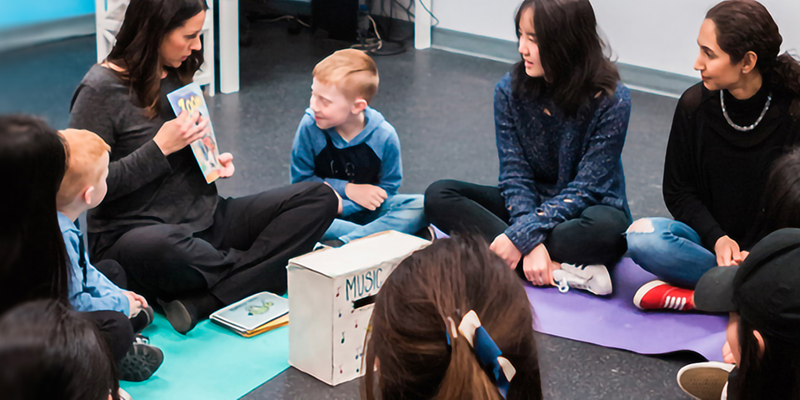
Students will develop a broad range of skills through the study and practice of our certified and approved courses so they will be able to develop and lead daily activities for children. They will be able to carefully select age-appropriate materials for young children and develop programs and activities for the important early years of learning.They will become nurturing and understanding Caregivers/Educators, who will implement these carefully selected materials and activities to help promote the social, emotional, physical, cognitive and early literacy development in each child. Some of these exciting activities include storytelling and fingerplays, music and movement, songs and games, creative arts and crafts, science and nature opportunities, along with many other activities that support children’s development and learning through play. They also observe children and communicate professionally, when appropriate, children’s progress and/or needs with parents, other staff members and individuals involved with the child’s development. They attend meetings, workshops and professional development opportunities to continue their learning and progress as competent and qualified Early Childhood Educators. They may also supervise and coordinate the activities of other Early Childhood Educators and ECE Assistants.
Important Websites:
https://www2.gov.bc.ca/gov/content/family-social-supports/caring-for-young-children/child-care
https://www2.gov.bc.ca/gov/content/education-training/early-learning/support/strongstart-bc
https://www2.gov.bc.ca/gov/content/education-training/early-learning
This program will expand upon the skills gained through the Early Childhood Education basic program. Greater opportunities exist for those who provide an Infant & Toddler setting. As licensed care expands, caregivers with formal credentials will have better opportunities.
There are a range of child, youth, and family focused support programs and interventions in BC to help promote children’s healthy
development, maximize quality of life, assist families in their role as primary caregivers and support full participation in community life.
This specialty provides advanced training in ECE competencies for individuals interested in working with Children With Exceptionalities and/or Infant and Toddler care.
Sprott Shaw is a member of Early Childhood Educators of British Columbia (ECEBC).
Career Opportunities
- Preschools
- Young Parent Programs
- Recreational Programs
- Group Child Care
- Foster Parenting
- Supported Child Dev
- Family Child Care
- Nanny
- Cruise Ships and Resorts
- Before & After School Care
- StrongStart Facilitators
- Early Childhood Educator
- Child Care Ctr Supervisor
- Child Care Supervisor
Learning Objectives:
At the end of this program the student will have developed a broad range of skills through the application and understanding
of the following learning outcomes:
- Cultural, economic, and generational influences on development
- Main categories and methods of observational recording
- Current licensing and registration regulations, development of policies and procedures, floor plans, and child care center
design - Development of partnerships with parents, colleagues, and other service providers
- Positive contemporary child guidance practices, causes and characteristics of inappropriate behaviour
- Planning and implementing comprehensive program plans, focusing on social, emotional, cognitive, physical, language and cultural development
- Activities to facilitate diversity and multi-cultural experiences and concepts to enhance curriculum
- Creating a positive learning environment that includes fun and engaging music and movement activities, enhancing other
learning such as language and language skills - The use of concepts and activities from LEAP BC 2010 Resource Booklet and recognizing movement categories and motor
skills - Creativity and open-ended, process-oriented creative art activities and experiences
- Verbal and non-verbal communication skills and techniques.
- Design newsletters and communication tools for parents, children and staff
- Signs and symptoms of common communicable childhood illnesses
- Goal setting, note taking, problem solving, and team work
- Interview techniques and creating an employment package
Why Become an Early Childhood Educator in BC?
- Growing Job Opportunities: In the latter half of 2024 alone, nearly 600 new childcare spaces were opened throughout BC according to the BC Government.
- Growing Wages: As part of the Early Childhood Educator Wage Enhancement Plan, the basic ECE wage has been increased to $29 an hour.
- A Federally Supported Industry: According to the Early Childhood Education Report, the federal government is expected to invest $3.2 billion in the childcare sector over the next 5 years, resulting in potentially 30,000 new regulated childcare spaces.
- Bursaries Available: The Early Childhood Educators of BC and the Province of British Columbia are providing bursary funding for those looking to enter the field. Eligible students can apply for up to $4000 in funding. For more information, visit https://www.ecebc.ca/bursaries-grants/ece-education-support-fund
Why Study At Sprott Shaw?
- Lifetime access to dedicated Employment Services Specialists (ESS) who can help you with resume and cover letter writing, interview skills, and the overall job search after graduation
- Lifetime tuition-free access to course refreshers if you ever need to retrain and update your skills
- Practicum opportunities with recognized organizations across BC
- Multiple start dates so you can start your education when you want to without the wait
- Career and professional development success courses to help create a career development marketing plan, learn the cardinal rules of professionalism, and identify the target markets and employment resources in the counselling field
- Preparation and orientation courses to teach you how to find credible research, write papers, create proper citation formats including APA, and study effectively for exams
- All-inclusive program costs where what you see is what you pay. Our costs include registration fees, assessment fees, tuition, textbooks, supplies, course materials, uniforms, certificates, graduation fees, practicum fees, and much more
- Grant and scholarship opportunities are available to help you save on tuition. Up to $4000 in scholarships and grants are open to recent high school graduates, Sprott Shaw alumni, military veterans, and more! Click here to browse our full list of grants and scholarships
Where Are Sprott Shaw Graduates Working?
Our Early Childhood, Education, and Support graduates can be found working throughout the province. In addition to school districts across BC, our Early Childhood Education and Education Assistant graduates can be found working at daycares and preschools such as CEFA Early Learning and the Boys and Girls Club.
Community Support Workers and Mental Health and Addiction workers can be found working in women’s shelters, mental health and addiction recovery facilities, homeless shelters, and more.
Click below to learn more about where our graduates are currently working. Please note that these lists do not cover every single business that has hired a Sprott Shaw graduate, but they do provide a good representation of the sort of industries that Sprott Shaw graduates are working in.



Program Details
Course Prerequisites:
- Parts I, and II (at the successful completion of Parts I and II the student will receive an ECE Basic Certificate) will be taken prior to III, IV and V.
Note: No Diploma will be issued for this program without the successful completion of Part I and II.
Admission Requirements:
Applicants must meet all of the pre-requisites listed below, meet their financial obligations to the college at registration, and acknowledge their understanding of SSC’s policies and procedures provided in the Student Handbook, prior to starting classes.
NOTE: Students are provided with a detailed list of books, e-resources, workshop/lab supplies, and lab/tool kits that are included in the program’s fees and will have the opportunity to opt in or out of purchasing from Sprott Shaw College or any other specific source any of these items at the time of registration.
Preference will be given to those who can provide letters of reference detailing volunteer or professional experience working with children indicating their suitability for working in the field of Early Childhood Education
Applicants must successfully complete the admissions interview and English language entrance requirements.
Education Level (one of the following)
- Grade 12 or equivalent (GED, Adult Basic Education) with evidence of a ‘true certified copy’ or original transcript
- Mature student status (age 19 and one year out of high school)
LANGUAGE PROFICIENCY POLICY:
All programs at Sprott Shaw College (SSC) are conducted in English, making proficiency in the English language a requirement for enrollment.
The required proficiency can be demonstrated through 1) completion of secondary or post-secondary education where English is the language of instruction and is also one of the country’s official languages, or 2) An approved English Language Assessment, 3) For mature (≥ 19 years) students who are facing barriers and cannot access their educational records or provide sufficient evidence of secondary or post-secondary education.
SSC programs that have a higher English language level, require additional years of secondary or post-secondary education where English is the language of instruction, or where language proficiency is to be otherwise demonstrated, are identified within the relevant program outlines.
For all other SSC programs, English language proficiency is demonstrated by:
1. Education
a) Secondary Education
Evidence of Successful Fulltime Secondary Education Completion*, where English is one of the principle languages of instruction:
i) Showing two (2) years, if all Grades successfully completed are 10, 11, or 12, or
ii) Showing three (3) years if the successful Grades are 8, 9, 10, 11, or 12
OR
b) Post- Secondary Education
Evidence of 2 years of Fulltime Post-Secondary Education Completion*, where English is one of the principle languages of instruction. Language development courses (i.e. ELL courses) cannot be included in this calculation.
*This may be demonstrated by providing a high school transcript, completion of a BC Adult Graduation program, or providing international education credentials recognized through WES, ICES, or IQAS.
Countries where English is the language of instruction:
American Samoa, Anguilla, Antigua and Barbuda, Australia, Bahamas, Barbados, Belize, Bermuda, Botswana, British Virgin Islands, Canada, Cayman Islands, Dominica, Falkland Islands, Fiji, Gambia, Ghana, Gibraltar, Grenada, Guam, Guyana, Ireland, Jamaica, Kenya, Lesotho, Liberia, Malta, Mauritius, Montserrat, New Zealand, Nigeria, Saint Helena, Saint Lucia, Saint Kitts and Nevis, Saint Vincent and the Grenadines, Seychelles, Sierra Leone, Singapore, South Africa, Tanzania, Trinidad & Tobago, Turks and Caicos Islands, Uganda, United Kingdom, United States, United States Virgin Islands, Zambia, & Zimbabwe.
OR
2. Assessment
By achieving a recognized standardized language test/assessment.
Approved English language assessment options:
· IELTS. International English Language Testing System (IELTS) Academic: Minimum overall score of 5.5.
· TOEFL. Test of English as a Foreign Language IBT: Minimum overall score of 46
· CAEL. Canadian Academic English Language Assessment. Minimum overall score of 40
· CELPIP. Canadian English Language Proficiency Index Program: Listening 6, Speaking 6, Reading 5 and Writing 5.
· DET. Duolingo English Test: Minimum overall score of 95
· PTE. Pearson Test of English Academic: Minimum overall score of 43
· Cambridge English Qualifications: Minimum overall score of 160 or “C”
· Cambridge Linguaskill: Minimum overall B2 level
· LANGUAGECERT Academic: Minimum overall B2 level
· MET. The Michigan English Test: Minimum overall B2 level
· iTEP Academic: Minimum overall score of 3.5
· EIKEN: Minimum placement of Grade Pre-1
OR
3. Accuplacer
For mature (≥ 19 years) students who are facing barriers and cannot access their educational records or provide sufficient evidence of secondary or post-secondary education.
Applicant must be 19 years or older at the start of the program and a Canadian citizen or permanent resident and provides attestation that they have completed at least three years of full-time secondary or post-secondary instruction in English in a country where English is one of the principal languages (please refer to Countries where English is the language of instruction).
Accuplacer English Assessment (Next Generation) and achieves the following minimum scores required:
· Reading: 230
· Writing: 230
· WritePlacer: 4
For more information on our English language program-specific requirements and English equivalencies please click here: Sprott Shaw College English Language Requirements and Equivalents
Health Requirement (one of the following)
- Student Health Declaration form
- Physician’s waiver
Other Requirements (less than 3 months prior to starting classes)
- Excellent communication skills (written composition)
- The Criminal Records Review Program (CRRP) screens people who work with children or vulnerable adults, (students must complete no more than 3 months prior to program start date).
- Provide evidence of full COVID-19 vaccination OR a signed vaccination waiver on file
Practice Education Requirement:
Please note certain facilities may require proof of a negative TB test. Without this documentation on the student file, it may limit practicum placement opportunities.
Diploma Requirements:
- 70% average upon successful completion of all courses.
First Aid Training:
- Per: the Community Care and Assisted Living Act – Child Care Licensing Regulation (Section 23 and Schedule C), students are trained, and practicum students and employees, require a valid first aid and CPR certificate. The course provided in our program offers 8 hours of instruction, at least 3.5 hours delivered in person, and includes demonstration and skills relevant to matters in respect of children and infants.
- Students will complete FoodSafe and First Aid – Emergency Child Care First Aid and CPR (1 day) or Emergency First Aid-Community Care (1 day) – during the program.
An Early Childhood Education Basic Certificate from Sprott Shaw College is given upon successful completion of all ECE Basic courses in this program.
After successful completion of this certified and approved ECE Certificate Program, in order to register as an Early Childhood Educator
in BC (five-year registration), you must apply to the ECE Registry for registration and provide the following:
- An official transcript issued by Sprott Shaw College of courses completed (photocopies not accepted).
- A letter of reference attesting to the applicant’s personal suitability to the field of Early Childhood Education and satisfactory completion of the required 500 hours of work experience, written by the supervising Early Childhood Educator with whom the applicant worked.
- Application can be made for a one-year certificate while obtaining 500 hours of work experience.
- After successful completion of one of the following courses, application can be made for Assistant Certification (EC100, EC110 or EC180).
An Early Childhood Education Children with Exceptionalities Diploma from Sprott Shaw College is given upon successful completion of all courses in this program
Note that successful completion of any of the following courses – EC100, EC110 or EC180 individually or as part of a program will allow the student to apply for assistant certification. Successful completion of EC100 includes attendance of a minimum of 90 instructional/classroom hours to be eligible for this certificate.
Note: Child Care sites may require more current and/or additional CRC (for instance: RCMP) and/or other immunizations (to be done at student’s expense) prior to practicum and/or observing. Students are responsible for their own transportation. All three practicum sites are subject to availability. A minimum of two different practicum locations is required.
Practicum training may be conducted in shifts to accommodate placement facilities’ needs (such as 8-hour shifts). Necessary Ministry licensing requirements will be included in the curriculum and scheduled throughout the program.
Students can expect to complete 1 – 3 hours of homework per day
Contact Us Today!
Our advisors are happy to answer any questions.
Courses List
This 65 week Diploma program requires the student to complete the following courses.- The process of learning and maturation, child growth and development
- Cultural, economic, and generational influences on development
- Schedule B needed for child observations in child care centres
- See EC100 course outline for details on applying for ECE Assistant Certificate
- Current licensing & registration regulations
- Developing policies & procedures, floor plans, and center design
- Developing partnerships with parents, colleagues, and other service providers
- Positive contemporary child guidance practices
- Understanding the causes and characteristics of inappropriate behaviour
- Plan and implement comprehensive program plans
- Focus on social, emotional, cognitive, physical, communicative, and cultural development
- Benefits of an investigative, natural science program
- Developmentally appropriate activities
- Ways to maintain curiosity and exploration
- Activities to facilitate diversity and multicultural experiences
- Concepts to enhance the curriculum
- Benefits which include early math and numeracy
- Create a positive learning environment
- Fun, engaging music and movement activities
- Enhance other learning such as language and listening skills
- Plan, implement and evaluate developmentally appropriate programs that meets the observed needs of children
- Plan programs that reflect and respect diversity
- Understand the relationship between the environment and
the development of children's behaviour
- Understanding of creativity
- Special needs / cultural diversity
- Workshop experiences
- Basic language arts
- Literacy goals for three- to five-year-olds
- Plan/implement activities for young children
- Verbal and non-verbal communication techniques
- Design newsletters and communication tools for parents, children and staff
- Recognize and respond appropriately to a wide range of individual communication style
- Demonstrate professional communication skills which are mutually supportive of co-workers, families and communities
- Apply knowledge of and respect for cultural, socioeconomic and family diversity
- Demonstrate professional growth, attitude and conduct, including adherence to the Code of Ethics and ability to advocate
- CPR & First Aid (1 day) and FoodSafe
- Signs and symptoms of common childhood illnesses
- Developing safe and secure environments for young children
- Policies and procedures for licensing requirements for observing and reporting abuse and neglect
- Snack and meal planning, and applying the Canada Food Guide in childcare settings
- 3-week practicum - Includes Touch Back Lab
- Practice physical and emotional 'caring' skills
- Observe guidance techniques and display knowledge of appropriate skills
- Implement planned activities for individuals and small groups
- 3-week practicum - Includes Touch Back Lab
- Attend to personal care needs of children
- Practice guiding skills
- Plan, implement, and evaluate activities for small groups
- 4-week practicum- Includes Touch Back Lab
- Extend knowledge, skills, and attitude
- Observing and assessing
- Guidance
- Language and creative development
- Working in a team, and professional behaviour
- Learn effective study skills, time management, and goal setting.
- Understand college policies, technology, and expectations.
- Apply organization, writing, and citation techniques.
- Develop self-care and stress-management strategies for success.
Strategies for Student Success:
- Interview techniques
- Create a Career Development Marketing Plan
- Apply aspects of professionalism
- Identify target markets and employment resources
- Creating and maintaining a safe and healthy environment for infants/toddlers as well as children who require additional supports
- Review of comprehensive knowledge of the range of historic and current theoretical approaches to child growth and development
- A comprehensive overview of the competent development, implementation and maintenance of all policies and procedures for the administration, funding, government policy and advocacy areas of managing childcare settings and services
- A thorough presentation of the importance of parent, school, and community collaboration and increased knowledge of and respect for cultural, socioeconomic and family diversity
- The study of exceptionality (special education and supported childcare)
- Neurological disabilities, special health care needs, severe and multiple Disabilities, pervasive disorders and visual and hearing impairments
- Plan accessible, inclusive indoor and outdoor play environments
- Develop positive approaches for guiding, caring and interacting with children with challenging behaviours
- The study of exceptionality (special education and supported childcare)
- Neurological disabilities, special health care needs, severe and multiple disabilities, pervasive disorders and visual and hearing impairments
- Plan accessible, inclusive indoor and outdoor play environments
- Develop positive approaches for guiding, caring and interacting with children with challenging behaviours
- 4-week practicum (includes Touch Back Lab)
- Observe, monitor and record each child's developmental progress
- Create and maintain a safe and healthy environment
- Plan and implement developmentally appropriate programs and activities for children who require additional supports
- Promote and understand inclusion
- Use specialized equipment, adaptations and materials as needed and/or prescribed